 OPEN VIRTUAL TEMPLE ↗
INTRODUCTION
Understanding the tradition and its context.
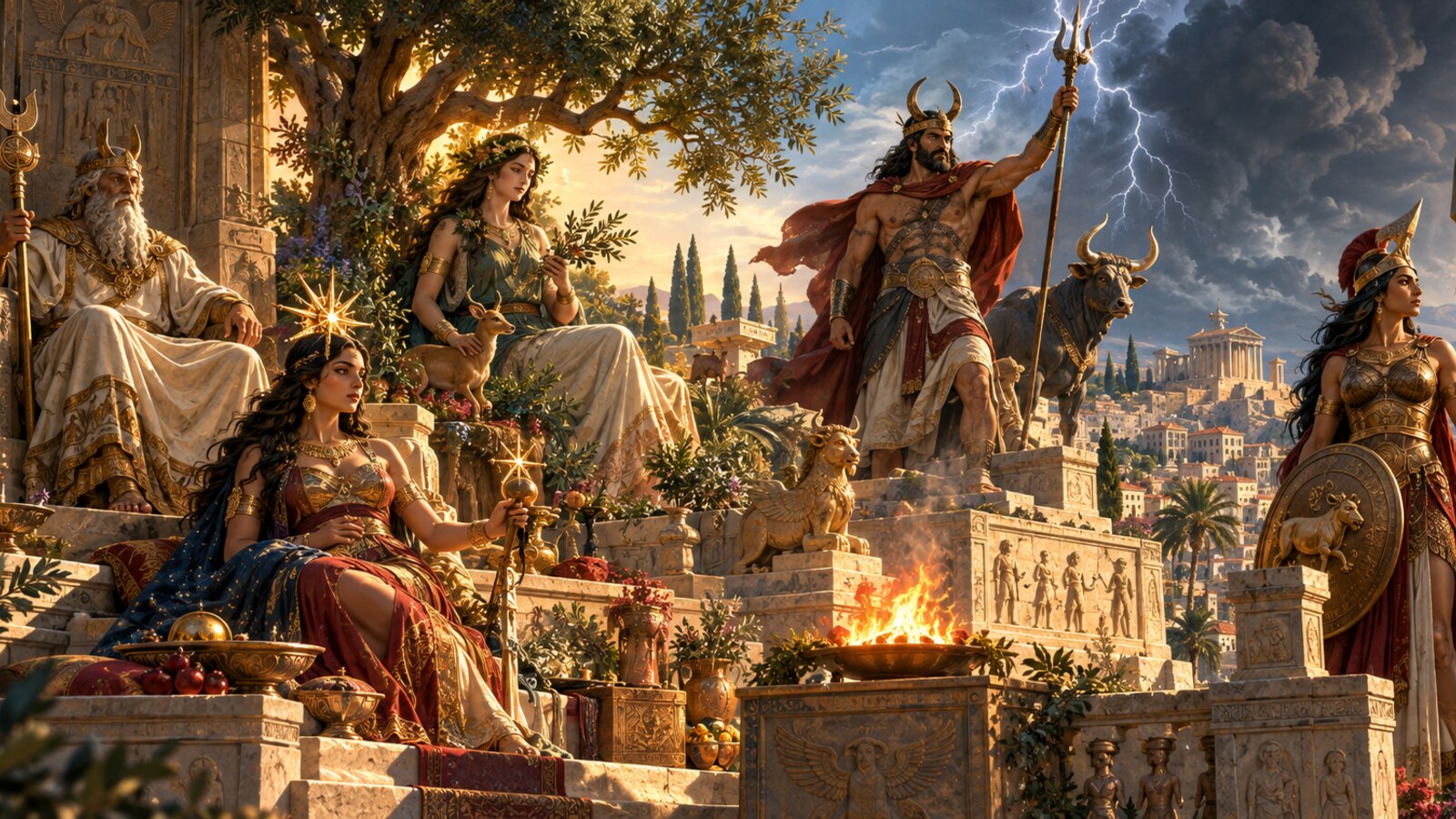
“Canaan” is a broad term for the lands and peoples of the ancient Levant. Religious evidence comes from different cities and periods; there was no single, fully uniform state theology. Texts from Ugarit offer important evidence for a divine council led by El and figures such as Athirat, Baal, Anat, and Astarte.
Other names in the sources include Yam, Mot, Resheph, Dagan, Shapash, Kothar-wa-Khasis, and many more. Their names, roles, and relationships should be read in the linguistic, civic, and historical contexts that produced the sources.
REGION AND SOURCES
The ancient Levant, including Ugarit and other Canaanite city-states; local practices varied.
DEITY DIRECTORY
Figures within this pantheon.
Choose a figure to open its profile, writings, and individual virtual temple.
OPEN VIRTUAL TEMPLE ↗OPEN VIRTUAL TEMPLE ↗OPEN VIRTUAL TEMPLE ↗Athirat (Asherah)
Divine mother and figure associated with El in Ugaritic texts
Divine mother and figure associated with El in Ugaritic texts
Enter temple ↗OPEN VIRTUAL TEMPLE ↗OPEN VIRTUAL TEMPLE ↗El
Elder god, father figure, and leader of the divine council
Elder god, father figure, and leader of the divine council
Enter temple ↗✧
OPENING INVOCATION · CONTEMPORARY TEXT
Opening invocation for Canaanite Gods and Goddesses
A contemporary invocation written for Parahyang; not an ancient quotation or reconstruction.El, Athirat, Baal, Anat, Astarte, and the divine names preserved in ancient Levantine sources, receive this as a contemporary reflection. May we read fragile heritage carefully, respect the differences among cities and peoples, and care for the land and waters that sustain life.